Distribution & Transformer
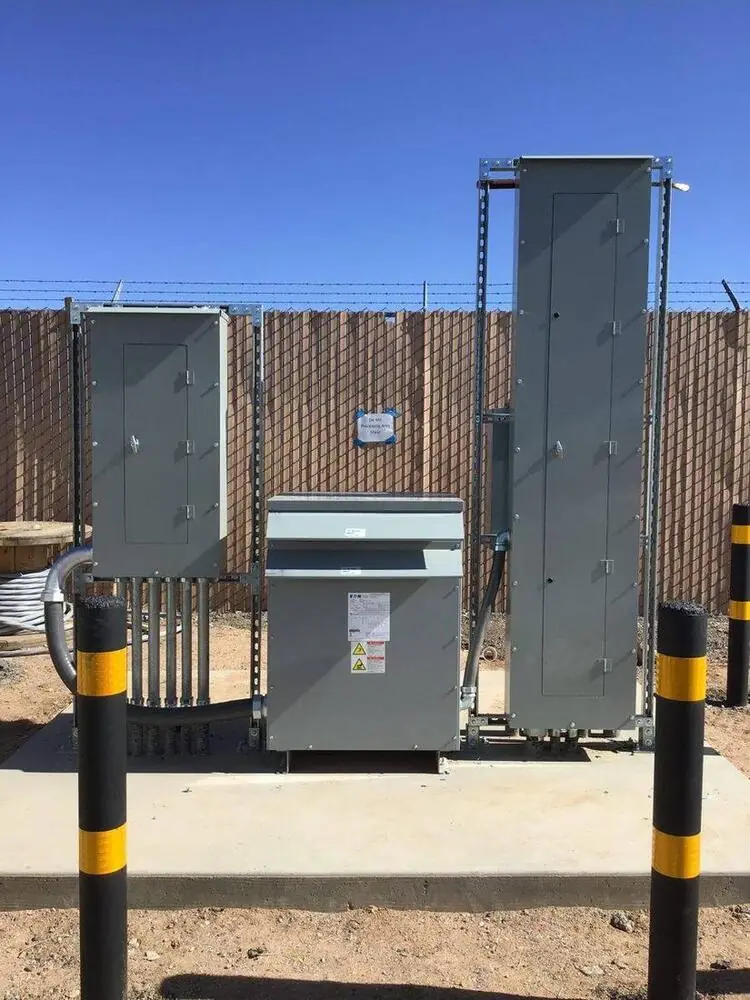
Panelboards and a transformer set on a commercial concrete pad.
From the utility point of connection to the last device, we design, install, terminate, and commission electrical systems for commercial and industrial facilities in Tucson and across Arizona — coordinated with our own underground and construction crews.
Core Capabilities
These are the scopes our CR-11 crews self-perform. If you're looking for a commercial electrician in Tucson specifically, our Tucson commercial electrician page covers local permitting, TEP and Trico coordination, and how we deliver in Pima County. For build-outs in occupied buildings, see our tenant improvement electrical page — and for plants, process power, and heavy motor loads, our industrial electrician services. And for data center and mission-critical projects — server rooms, UPS systems, standby power — see our data center & mission-critical electrical page.
Incoming service, switchgear, and the distribution backbone that feeds the building. We size, install, and energize systems that are built to carry today's load and tomorrow's expansion.
In Tucson, that sizing starts with the desert itself. NEC ampacity tables assume 30°C ambient air; a gear yard or rooftop here spends the summer well past 110°F, so conductor correction factors and transformer placement are engineering decisions, not defaults — and pad-mounted equipment gets set to shed monsoon runoff and wind-driven dust. We coordinate new and upgraded services with TEP and Trico from the first application, and when an existing building has simply run out of capacity, our electrical panel and service upgrade crews replace gear in planned phases that keep the facility operating.
Interior, exterior, and site lighting engineered for code, energy performance, and the way the space is actually used — including controls and daylighting strategies.
Exterior lighting here answers to more than the NEC. Tucson and Pima County enforce one of the country's strictest dark-sky outdoor lighting codes — written to protect the observatories on the mountains around the city — so full-cutoff fixtures, lumen limits, and warm color temperatures are requirements on site and parking lighting, not preferences. Indoors, an LED retrofit pays twice in the desert: every watt of lighting removed is a watt of heat the rooftop units no longer have to fight through a 110° afternoon.
Systems the building can't open without. We install and coordinate life-safety infrastructure to code and through inspection sign-off.
Monsoon season is the annual test of this scope. Summer storms take down feeders and drop whole blocks at a time, and an occupied building's egress lighting, exit signs, and alarm supervision have to ride through it — NEC Article 700 gives emergency systems ten seconds to pick up the load. We install and commission standby generators and automatic transfer switches as part of the same scope, and our field guide on wiring a generator transfer switch shows the level of detail our crews put into the handoff between utility and emergency power.
Low-voltage and technology infrastructure that runs the modern building — structured, labeled, and documented for the people who maintain it.
Low-voltage work in the desert has its own failure modes: cable jackets that survive the attic heat above a Tucson ceiling, camera housings that shrug off dust-laden monsoon outflow, and grounding electrodes that actually reach earth through caliche — the cemented hardpan that makes a driven rod a gamble across much of Pima County. We design grounding and bonding to measured values, following the same discipline we document in our guide to testing ground resistance, and we label and record every cable and pathway so the next facilities manager inherits documentation, not mysteries.
The intelligence layer that ties lighting, power, and mechanical equipment together — programmed, integrated, and commissioned.
Controls are also how a building adds load without buying a bigger service. Demand monitoring, scheduled load shedding, and managed commercial EV charging let new equipment share capacity around the afternoon peak — which matters here, where every rooftop unit is already running flat out on a June day and commercial demand charges reward anything that flattens the curve. We program the sequences, prove them during commissioning, and train the people who will live with the system after we leave.
Our Work
Service & distribution, switchgear, and equipment our crews have installed and set on commercial and industrial sites in Tucson and across Arizona — the kind of work a commercial electrician in Tucson should be able to show you, not just describe.
Panelboards and a transformer set on a commercial concrete pad.
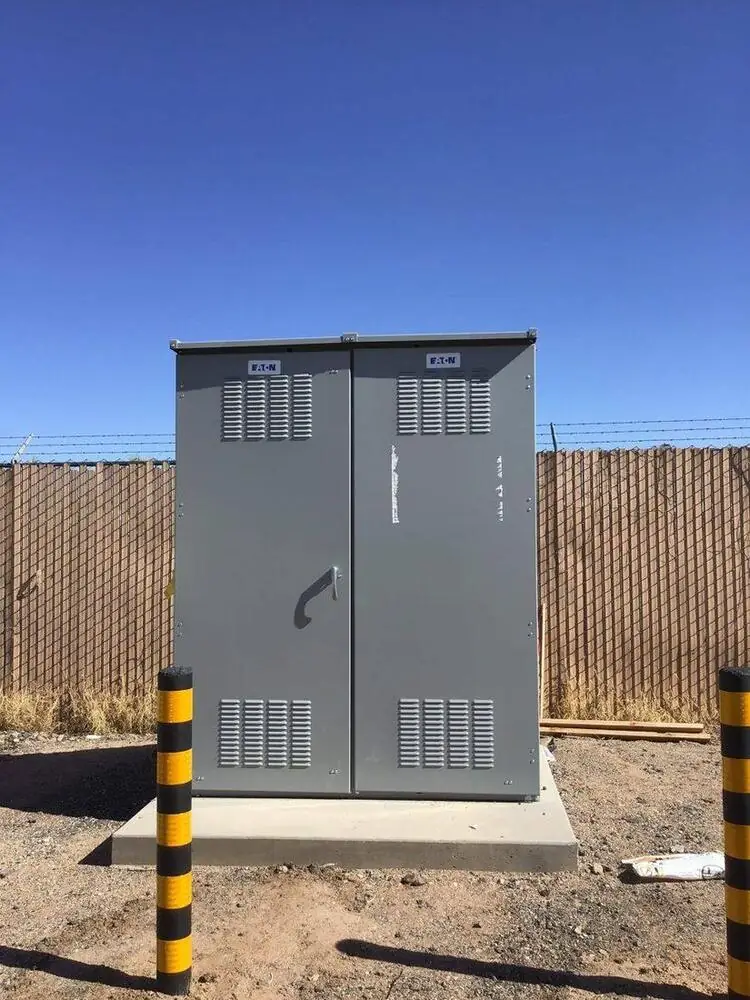
Eaton switchgear enclosure set on its pad at a commercial site.
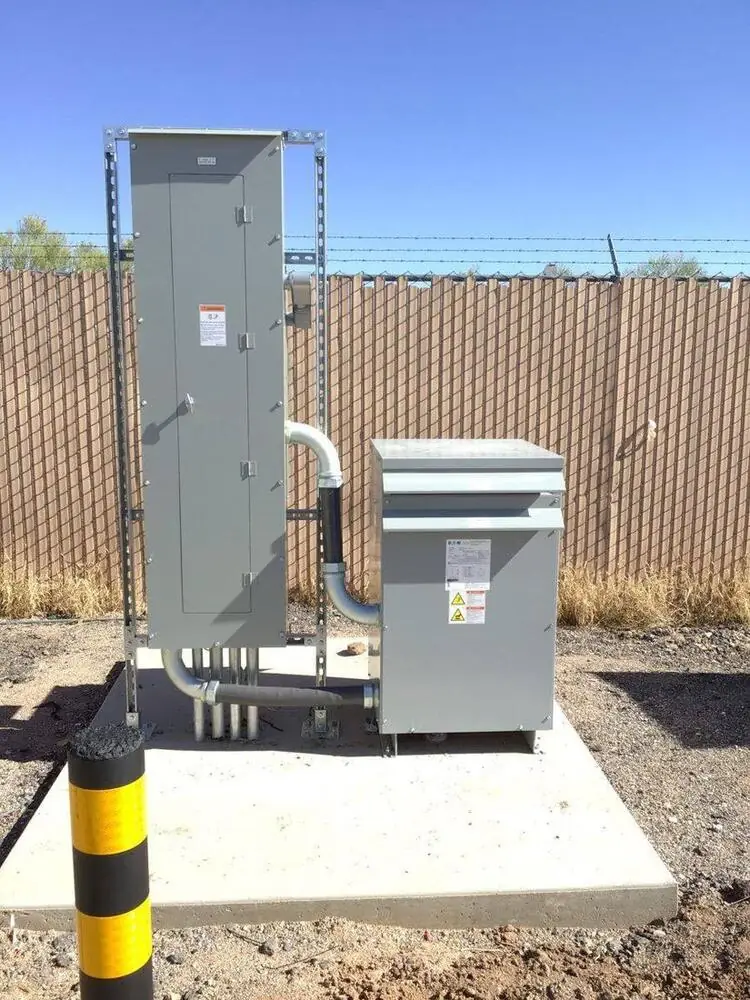
Service-entrance panel and transformer with conduit run to the pad.
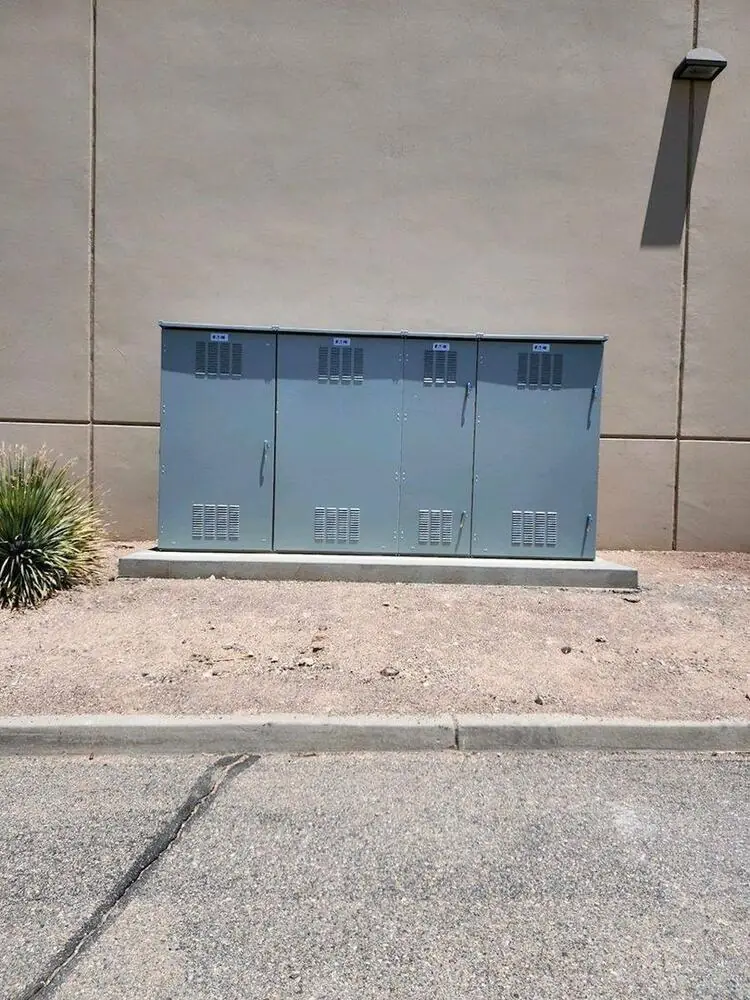
Sectionalized Eaton distribution gear at a commercial facility.
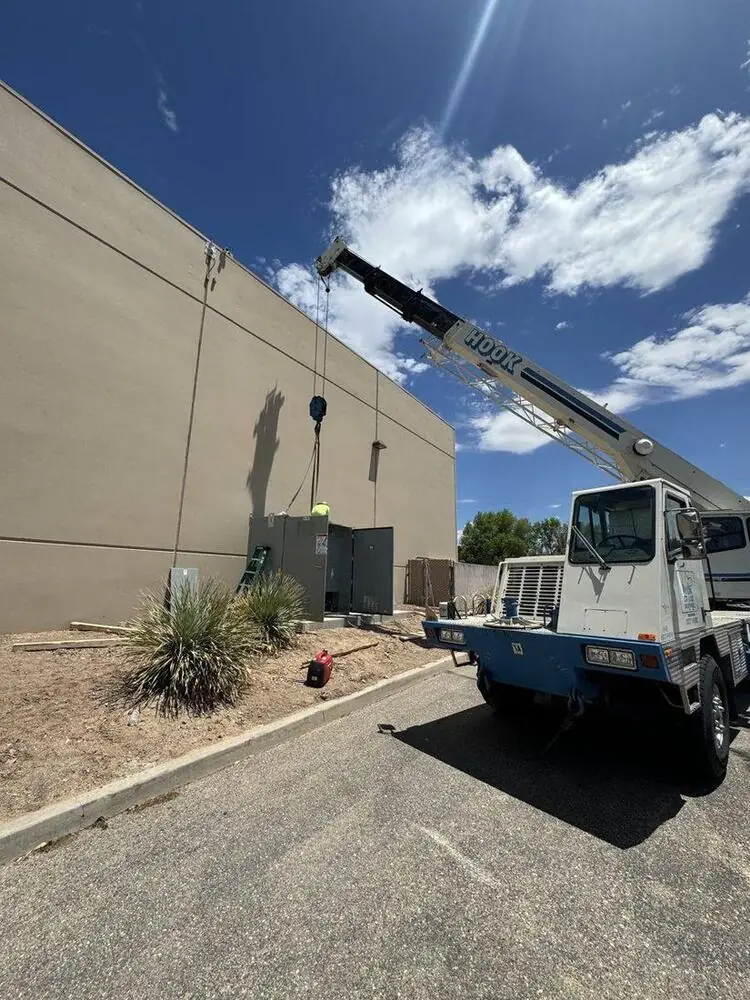
Crane-set switchgear delivery on a commercial site.
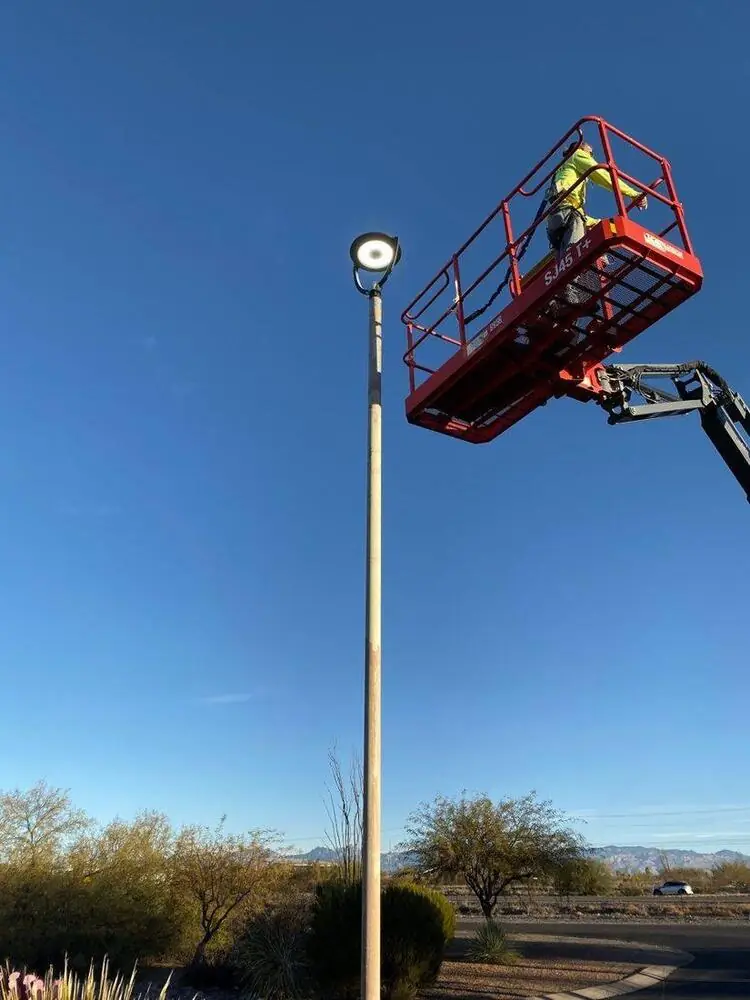
Lift work on a commercial site lighting pole.
How We Deliver
And after turnover, our commercial electrical maintenance crews keep the systems we build inspected, tested, and running.
Load calc, gear selection, and constructability review before drawings are locked.
Long-lead switchgear and equipment ordered early to protect the schedule.
Rough-in, distribution, devices, and terminations by our own field crews.
Testing, energization, inspection sign-off, and owner training.
Coordinated In-House
Our electrical scope plugs directly into our underground and construction teams. Duct banks, primary service, and site lighting bases are installed by crews who answer to the same project manager — so the power that leaves the building is sequenced with the dirt work outside it.
See underground & equipmentFAQ
Straight answers on how commercial electrical work actually gets scoped, permitted, and built in Tucson. Have a code question? Put it to our free NEC code assistant, or use the calculators our own estimators use.
Yes — most of our service and panel upgrades happen in buildings that never close. We sequence the work around your operating hours, pre-build everything that can be assembled before the shutdown, and compress the actual outage into a planned window agreed on in advance, with tenants, IT loads, and refrigeration accounted for in the phasing plan rather than discovered during it. Our panel and service upgrade and tenant improvement pages cover how we run this work.
It depends on the scope and TEP's design queue — and it is almost always longer than owners expect, so start early. A metering or panel change moves faster than a new transformer or a primary extension, which can run months from application through utility design, easements, and construction scheduling. We submit the utility application at the start of design rather than the end, and we maintain a plain-English summary of TEP's new-service requirements so owners know what the utility will ask for before it asks.
Yes. We prepare and submit the electrical permit package, respond to plan-review comments, and schedule and attend every inspection through final sign-off — City of Tucson, Pima County, or the surrounding jurisdictions. Because the drawings and the installing crews come from the same company, review comments are resolved by the people who will actually build the correction.
Happily. Design-build is how we deliver full projects, but a large share of our work is straight electrical scope under a GC — bid from your drawings, coordinated through your superintendent, and closed out with your paperwork. The CR-11 license and the crews are the same whether we hold the prime contract or you do, and our commercial electrician page covers how we deliver that scope in Tucson.
There is no honest per-square-foot answer. Cost is driven by service size and utility scope, switchgear lead times, whether the building stays occupied during the work, ceiling height and structure, and how much of the scope is life-safety or special systems. What we can do is price your actual project: send drawings or a scope narrative and we'll return a number built by the crews who will do the work — request a bid to start.
Drawings if you have them — even a 50% set is enough to start pricing and flagging long-lead gear. If you don't, a scope narrative, square footage, major loads, and the target schedule get us moving, and our in-house engineering team builds the load calculation and one-line from there. Bids come back with the distribution equipment called out and lead times flagged, so schedule surprises show up on paper instead of in the field.
Send us the drawings or describe the load. We'll size the service, flag the long-lead gear, and price it with the crews who will actually build it.
Request a Bid