Can you upgrade our RV park without closing it?
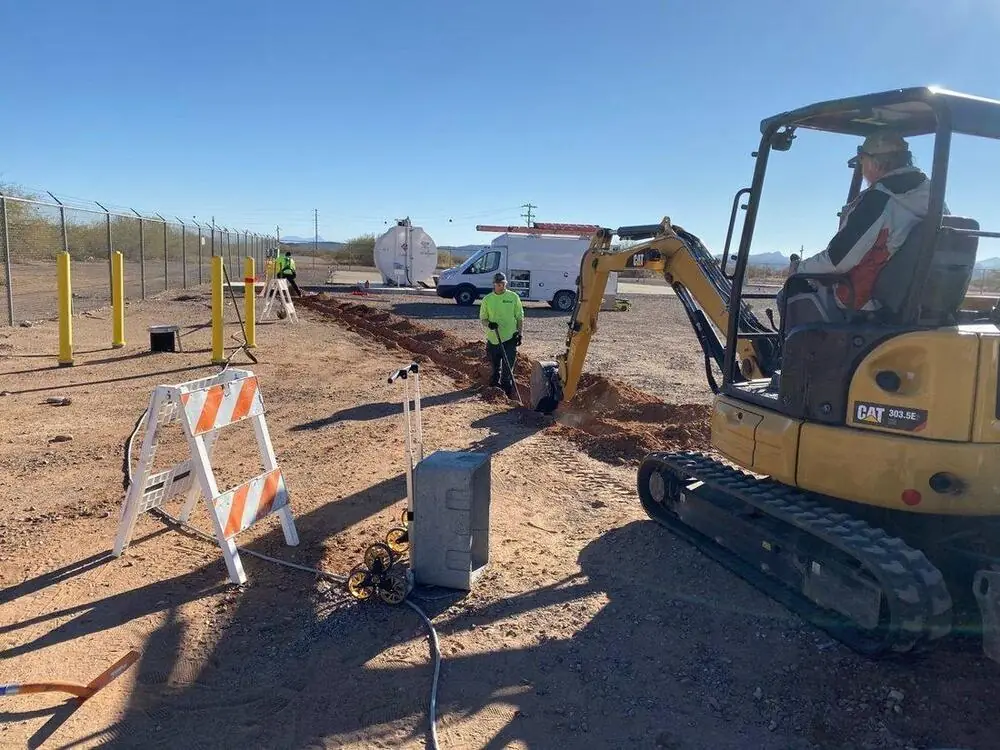
Yes — that is how we plan these projects from the first meeting. The work is phased by loop or row so only a defined group of spaces is offline at a time, trenches are opened and restored in short runs, and the heaviest phases are scheduled for summer, when snowbird parks empty out. Your office gets a written phase schedule to share with residents before each phase starts.
Why do our pedestals trip and brown out when the park is full?
Because the park is carrying loads it was never designed for. A modern rig runs two rooftop air conditioners, an electric water heater, and a residential refrigerator — several times the draw the original designers assumed per site — and on a July afternoon those loads all peak together. Long feeder runs sized for the old assumptions sag under it, so breakers trip and voltage drops. New pedestals alone won't fix that; the capacity has to be rebuilt from the service and feeders down, which is exactly how we scope it.
What are the NEC 551 demand factors, and why do they matter?
NEC Article 551 is the code article written specifically for RV parks. Instead of adding up the full rating of every pedestal — which would produce an absurdly large service — it assigns each site a per-site allowance and then applies the demand factors in Table 551.73(A), which step down as the site count grows, because not every site peaks at the same instant. Those factors let a park buy the capacity it actually needs rather than a theoretical maximum. We apply them in the load calculation, then sanity-check them against metering data from how your park really runs.
Do we have to convert our 30-amp sites to 50-amp?
Not all of them, but the market is pushing that direction — newer rigs with two air conditioners want 50-amp service, and NEC 551.71 sets minimum shares for the receptacle mix when sites are built or upgraded. Every site you convert also raises the calculated load upstream, so the 30/50 mix is a design decision, not just a pedestal order. We size the mix around the rigs you actually host and what the service can carry, and conversions can be phased across seasons as demand and budget allow.
Can we submeter and bill each space for electricity?
The infrastructure is straightforward — modern pedestals are available with metering provisions, and we design and install the metering side either way. Whether and how a park bills residents for power involves your rate structure and the rules that apply to submetered billing in Arizona, which is a business and regulatory question your attorney or accountant should confirm. What we make sure of is that the electrical design doesn't close the door: if you want per-space metering now or later, the pedestals and distribution are built ready for it.
When is the best time of year to do this work?
For most Southern Arizona parks, summer — the park empties when the snowbirds leave, which means bigger phases, fewer occupied spaces to work around, and a faster overall schedule. The winter before is when the real work starts: the load study, engineering, permitting, utility coordination, and gear orders all happen while the park is full, so crews and equipment are ready to mobilize the week the spaces open up. Switchgear and transformer lead times reward that kind of head start.
How much does an RV park electrical upgrade cost?
It depends on four drivers: the site count and how much of the 30/50 mix changes, whether the upstream service and transformers have to grow with it, how far the trenching runs and what surfaces it crosses, and how tightly the work has to phase around occupancy. We don't quote parks from a rate sheet — send us a site map, a recent utility bill, and photos of your pedestals and main gear, and we'll run the load study and come back with a scoped, phased, line-item bid.