Services · Tucson, Arizona

Electrical Code Corrections & Failed Inspections in Tucson, AZ

Somebody handed you a list. A red tag from the inspector, a fire-marshal deficiency notice, a letter from your insurance carrier, or a due-diligence report from the building you are about to buy. Arizona Electrical Solutions reads that list item by item, tells you what each citation actually requires, corrects it under our CR-11 electrical license, and meets the inspector for the re-inspection. Scheduled daytime work — urgent lists get the earliest slot we have. Send us the notice →

Code Corrections

A building can run perfectly and still fail inspection

Code compliance and working equipment are two different questions. Nothing has to be broken for a panel to get red-tagged: the lights come on, the HVAC runs, the tenant is happy — and the inspector still writes up the storage stacked in front of the gear, the directory nobody has updated since two tenants ago, the open knockouts in the side of the panel, and the junction boxes somebody buried above a hard lid. That is why this page exists separately from our commercial electrical repair and troubleshooting page: repair is for something that stopped working, corrections are for something that works fine and still does not comply.

The value we add is not just the wire. It is reading a correction notice the way an inspector wrote it, translating each cited section into a defined scope with a price, pulling the permit, and standing in the electrical room when the inspector comes back. Most owners and property managers do not want that conversation — and after the first failed re-inspection, most of them stop wanting to have it alone.

The List

Every Item, Translated

We go through the notice line by line and tell you what each cited section actually requires, which items are genuine hazards, which are documentation, and which are an inspector's reading worth a respectful conversation before anyone buys material. If you want to read the sections yourself first, our free code assistant answers NEC and fire-code questions in plain language with citations.

Free NEC code assistant →
The Scope

Correction, Permit, or Redesign

Some findings are a two-hour fix on a scheduled call. Some need a permit and a re-inspection. And some — an overloaded service, a clearance violation that cannot be solved by moving boxes, gear that is no longer rated for the fault current available — need calculations and drawings before anyone touches a conductor.

In-house electrical engineering →
The Close

Re-Inspection & Records

We pull the permit in our name, schedule the re-inspection, meet the inspector on site, and hand you the closed permit, the updated directories and labels, and photographs of the corrected work — the packet your carrier, your lender, or the next inspector is going to ask for.

Licenses & credentials →

How You Got Here

Four ways an owner ends up holding a correction list

The paperwork looks different depending on who wrote it, but the work that closes it is the same kind of work. These are the four origins we see:

A failed rough-in or final inspection

Mid-project, the inspector red-tags the job and everything downstream stops — drywall cannot close, the tenant cannot open, and the general contractor's schedule is now measured in re-inspection dates. We are frequently brought onto other people's projects at exactly this point. We scope the corrections, coordinate with whoever holds the permit, and get the job back in front of the inspector.

The fire marshal's annual inspection

Fire-code inspections are recurring and they touch electrical constantly: blocked working space, missing equipment identification, extension cords doing a permanent circuit's job, exit and emergency lighting that fails its functional test, panel covers left open. The deficiency notice usually carries a compliance deadline, and a re-inspection follows whether the work is done or not.

Your insurance carrier's findings

Carriers inspect commercial property, and electrical is where they look hardest — obsolete panels with known failure histories, thermal-scan exceptions, aluminum branch terminations, no arc-flash labeling, no maintenance records. These letters tend to arrive with renewal terms attached, which makes the deadline real even when the finding is not urgent.

A buyer's due-diligence report

During escrow on a commercial building, the property-condition assessment lists electrical deficiencies, and now it is a negotiation. Buyers need the list priced before closing so it becomes a credit or a repair escrow. We scope those quickly and in writing, and we will tell you plainly which items are cosmetic paperwork and which are a real capital number.

Common Findings

What actually shows up on Tucson correction lists

After enough of these, the same findings repeat. Working clearance is the most common one we see written up: NEC 110.26 requires a clear working space in front of gear — three feet of depth in the most common condition, and up to four feet where there are grounded surfaces or exposed live parts on the opposite side of the working space, with thirty inches of width or the width of the equipment (whichever is greater) and six and a half feet of headroom — and that space cannot be storage, stock, a mop sink, or the tenant's holiday decorations. It is also the cheapest finding on most lists to correct, because the fix is frequently a conversation and a floor stripe rather than a conduit.

The rest of the usual list: panel directories missing, handwritten in pencil, or describing a floor plan that stopped existing two remodels ago; disconnects and equipment with no identification of what they serve; open knockouts and unused openings left in enclosures; conductors and cables unsupported or run without protection where they can be damaged; junction boxes buried above hard lids where nobody can reach them without a drywall saw; GFCI protection missing where the adopted code now requires it, and AFCI protection missing in the dwelling-type spaces that requirement reaches — dormitory units and hotel or motel guest rooms; panels stuffed past their listed circuit count with breakers double-tapped and neutrals doubled under one terminal screw; grounding and bonding that was never completed or was disturbed by later work; and arc-flash labeling that is absent, or present but describing a system that has been rebuilt twice since the label was printed.

Tucson adds its own flavor to that list. Grounding electrodes driven into caliche rarely reach the resistance the code lets you stop at, so supplemental electrodes get cited on buildings where the original installer took a shortcut nobody could see. Monsoon water finds exterior gear through those same unused openings and missing fittings, and the finding written up in October is usually the reason a breaker tripped in August. Conductors in conduit baking on a Tucson rooftop are operating in an ambient far above the temperature basis the ampacity tables assume, so ambient correction gets flagged on rooftop runs that would have passed anywhere cooler. And because City of Tucson development services and Pima County development services do not always sit on the same code cycle, a detail that cleared inspection at one address can be written up at another — which is exactly why we read the citation before we price the fix.

  • Working-clearance encroachment in front of panels and switchgear, per NEC 110.26
  • Missing, illegible, or obsolete panel directories and equipment identification
  • Open knockouts, unused openings, and unsupported or unprotected conductors
  • Grounding and bonding gaps — incomplete electrode systems, missing bonding jumpers
  • GFCI protection missing where the adopted code requires it — and AFCI in dormitory units and hotel guest rooms
  • Overfilled panels, double-tapped breakers, and doubled neutrals under one terminal
  • Junction boxes made inaccessible above hard lids and finished ceilings
  • Arc-flash labeling absent, or describing a system that no longer exists

Permits & Re-Inspection

We pull the permit and we meet the inspector

This is the part owners hire out. Correcting the work is straightforward; getting it permitted, scheduled, inspected, and closed is the part that eats a facility manager's month. We pull the permit under our own license, submit whatever the jurisdiction wants to see, schedule the re-inspection, and have the electrician who did the work standing there when the inspector arrives — because the person who can answer the inspector's question in thirty seconds is the person who installed it.

Not every item needs a permit, and we will tell you which ones do not. Replacing a directory, closing knockouts, torquing terminations, clearing working space, and applying labels are corrections. Changing a service, adding or relocating circuits and gear, or altering the distribution is permitted work with an inspection at the end. Where the correction needs calculations or a stamped drawing — a load calculation, a revised one-line, a fault-current study — our in-house electrical engineering produces it rather than sending you to find an engineer on your own. When the citation is about arc-flash labeling, the first question is which label the notice is actually asking for: a missing NEC 110.16(A) arc-flash warning marking needs no study at all — it is a label we apply; a 110.16(B) label on qualifying service and feeder-supplied gear is built from the engineer's available-fault-current numbers; and only an incident-energy or PPE label per NFPA 70E 130.5(H) requires an actual arc-flash study, which is its own scope — see our arc flash and coordination studies page.

It also helps that a correction list is rarely purely electrical. A fire-marshal notice may cite exit lighting, a blocked electrical room, and a rooftop unit's disconnect in the same paragraph. A due-diligence report will mix electrical with mechanical and site findings. We hold four ROC licenses — KB-1 general building #329360, KA general engineering #312437, CR-11 electrical #276948, and CR-39 air conditioning and refrigeration #326401 — so a mixed list stays one contractor, one permit conversation, and one invoice instead of three subcontractors pointing at each other. And for owners who would rather not read next year's notice, the same crews run a commercial electrical maintenance program built around the findings these inspections keep producing.

  • Permit pulled in our name with City of Tucson, Pima County, or the local AHJ
  • Re-inspection scheduled, and the installing electrician on site to meet the inspector
  • Clear split between items that need a permit and items that simply need correcting
  • Load calculations, one-lines, and stamped drawings from in-house engineering when required
  • Mixed electrical, mechanical, and site findings handled under four ROC licenses
  • Closeout packet: closed permit, updated directories and labels, and photos of every corrected item

Self-Performed

The people who read the notice are the people who fix it

No estimator interpreting a citation for a crew that never saw it. Our electricians work from the notice itself, and our field-guide library is the same reference they were trained on — published publicly, because we would rather owners understand the work than take our word for it.

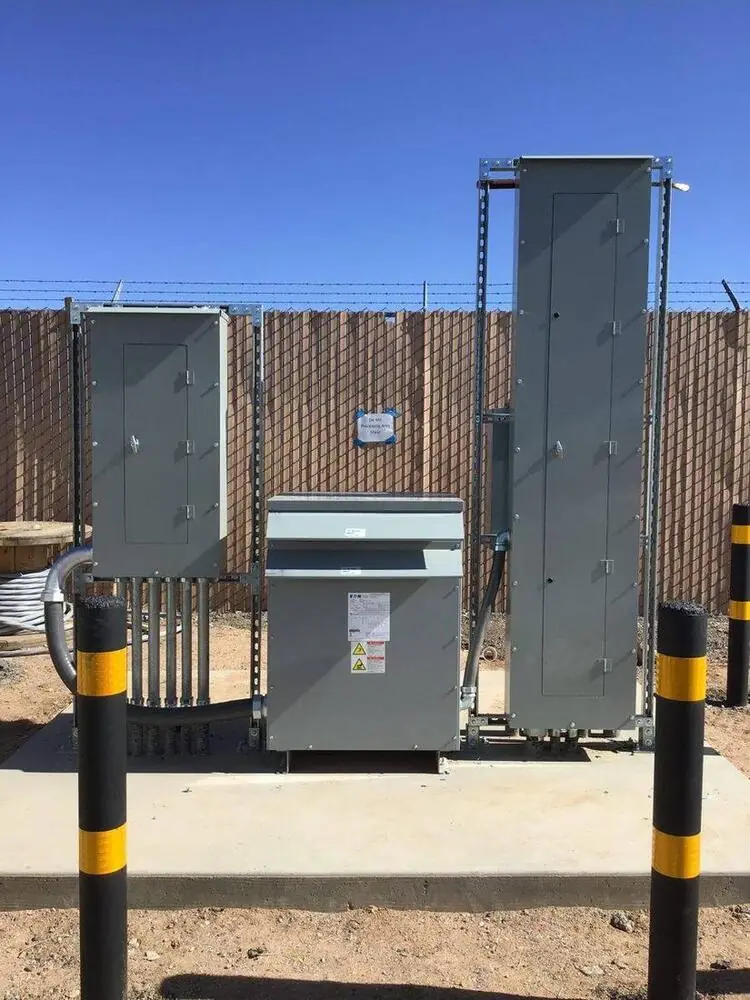
Commercial electrical distribution gear corrected, labeled, and documented by Arizona Electrical Solutions in Tucson, Arizona
At the Gear

Corrected, labeled, and photographed

Knockouts closed, conductors supported, terminations torqued to specification, neutrals landed one per terminal, directories rebuilt to match the building as it actually exists — and every item photographed before and after for the closeout packet.

Our field-guide library →

Electrical one-line and permit drawings produced by the in-house engineering team at Arizona Electrical Solutions
On Paper

When the fix needs a calculation

Some citations cannot be closed in the field — an undersized service, gear no longer rated for the available fault current, a clearance problem that needs equipment relocated. Those get load calculations, a revised one-line, and permit-ready drawings from our own engineers.

Electrical engineering →

FAQ

Tucson code correction questions, answered

We just failed inspection. How fast can somebody get out here?

The number that usually matters is not the hour we arrive — it is the re-inspection date printed on your notice. Correction lists come with a compliance deadline, so the real job is working backward from that date: scope the cited items, order anything with a lead time, pull a permit if the work needs one, build it, and get back in front of the inspector before the clock runs out. Give us the deadline when you call and we will tell you honestly whether it is reachable and what has to happen this week to reach it. All of this is booked daytime work on our weekday calendar; tight deadlines move to the front of that calendar rather than triggering an after-hours truck roll. If something on the list is a live hazard rather than a compliance gap, that is a different call — our commercial electrical repair and troubleshooting page covers how we handle response times and what to do before we get there.

Do we have to correct every single item on the list?

Usually most of them, but not always all of them — and knowing the difference is worth real money. Three things separate the items. First, a genuine violation of the code your jurisdiction has adopted, which gets corrected. Second, a documentation item — a missing directory, an unlabeled disconnect, an absent arc-flash label — which is cheap and never worth arguing about. Third, an inspector's interpretation of a section that reads differently to a licensed contractor, or a citation against an existing installation that complied when it was built. Code changes generally are not retroactive; an installation that met the code in its day is often allowed to remain unless the AHJ identifies an actual hazard or the permitted work disturbs it. The AHJ has real authority to interpret and enforce, so we do not pick fights — but we do go have the conversation with the code section in hand, and it frequently removes items from the list.

Will you pull the permit and deal with the inspector for us?

Yes, and that is most of why owners call us instead of handling the list in-house. We pull the permit under our own license, submit what the jurisdiction wants to see, schedule the re-inspection, and have the electrician who did the work on site to walk the inspector through each corrected item. You get the closed permit at the end. We can also work alongside a general contractor or the original permit holder when the correction lands mid-project and the permit is already in someone else's name.

Our fire marshal wrote up panel labeling and our exit lights. Is that electrical work?

Yes — and that mix is typical of a fire-code deficiency notice. Equipment identification and panel directories are electrical corrections. Blocked working space in front of gear is an electrical citation with a housekeeping fix. Exit signs and emergency egress lighting are electrical equipment with a testing requirement behind them: under NFPA 101, traditionally tested units get a 30-second functional test every month and a full 90-minute discharge test every year, with written records kept for the fire marshal. If your notice cites failed egress lighting, we replace or repair the fixtures and set you up with the testing documentation so the same item is not on next year's notice.

The notice cites working clearance in front of our panel. What does that actually require?

NEC 110.26 requires a clear working space in front of equipment likely to be examined or serviced while energized. The depth is set by what sits on the opposite side of that space, not by the voltage: three feet measured from the face of the equipment in the most common condition, and up to four feet where the far side of the working space has grounded surfaces or exposed live parts. Width is thirty inches or the width of the equipment (whichever is greater), and headroom is six and a half feet — and the space has to be clear, not just empty at the moment of inspection. There is also dedicated space above the equipment that cannot be used for piping, ducts, or storage. In practice this finding is written up because a tenant turned the electrical room into a supply closet. The fix is often just clearing it, striping the floor, and posting the room — but if the gear was installed too close to a wall, a door swing, or a fixed obstruction in the first place, relocating equipment is the honest answer, and we will price it that way rather than pretending paint solves it.

We are buying a building and the due-diligence report flagged electrical. Can you price it before closing?

Yes, and this is time-sensitive work we take seriously. Send us the property-condition assessment or the electrical section of it, and we will walk the building, sort the findings into what is a real capital number versus what is a labeling and housekeeping afternoon, and give you a written line-item scope you can take into the negotiation as a credit or a repair escrow. We will also flag anything the report missed — assessors are generalists, and an obsolete panel line, an undersized service for the use you are planning, or missing arc-flash documentation frequently does not make their list.

What does it cost to clear an electrical correction notice in Tucson?

The drivers, in the order they usually matter: how many items are on the list and how many are documentation versus construction (a directory and a set of labels is an afternoon; a service change is a project); whether the corrections need a permit and a re-inspection or just a scheduled service call; access — gear in an open electrical room is faster than gear above the ceiling grid of an occupied suite; whether the fix needs engineering, a load calculation, or a stamped drawing before anyone installs anything; and whether the list is purely electrical or mixes in mechanical and site items. We do not quote correction notices from a rate sheet. Send us a photo or scan of the notice and a few pictures of the gear it cites, and we will come back with a scoped, item-by-item bid that maps to the numbered items on your list, so you can see exactly what closes each one.
Related Services

Work that usually comes with this one

One contractor carries the whole scope. See every service we self-perform.

Related Service

Electrical Engineering

Power system design, photometrics, studies, and permit-ready documents.

Holding a correction notice?

Send us a photo or scan of the list and a few pictures of the gear it cites. We will translate every item, tell you which ones are real, and come back with a scoped bid that maps line for line to the notice — then pull the permit and meet the inspector.

Request a Bid Call (520) 308-6235